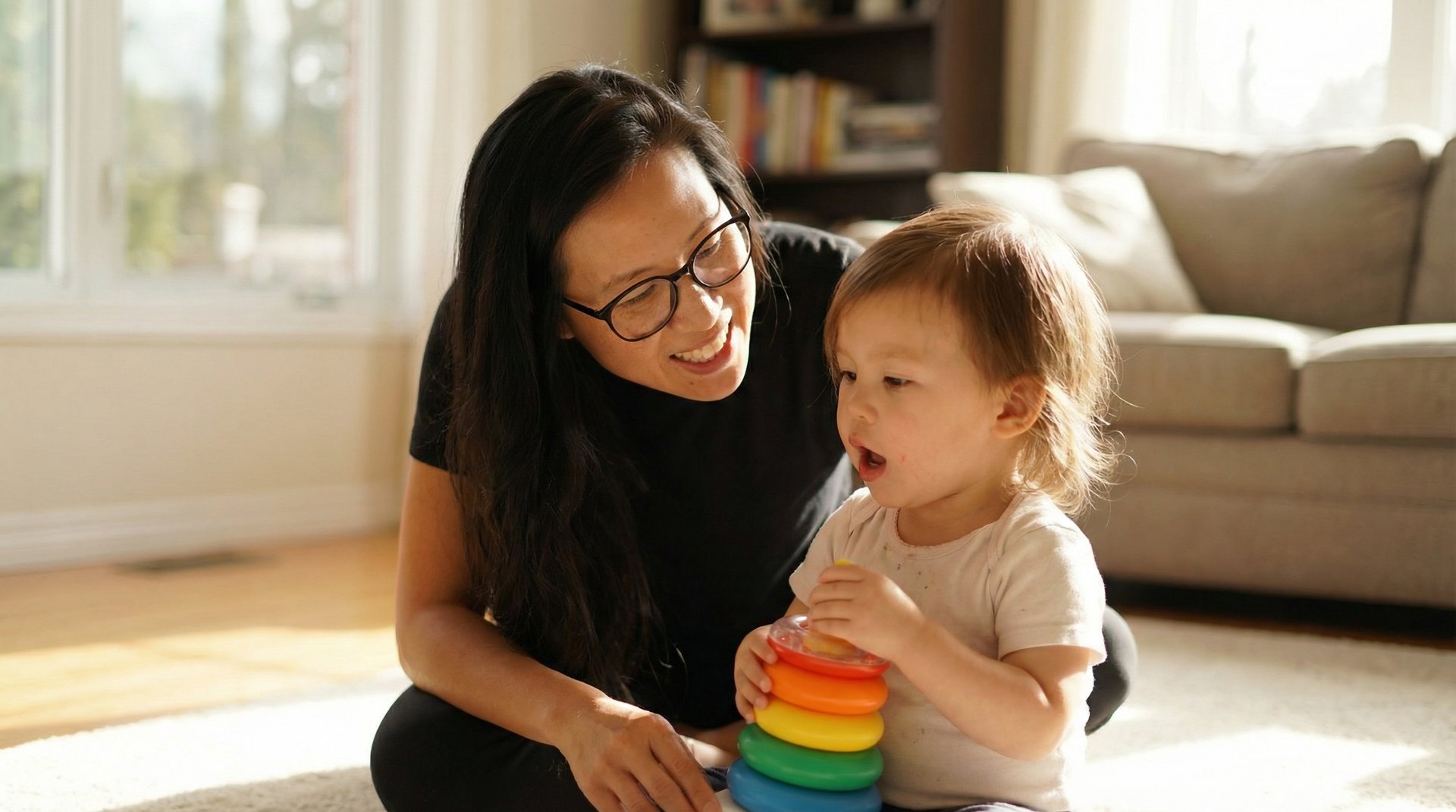
Introducing the 10 Steps to Speaking: Your Simple Roadmap to Helping Your Child Talk

At Grow For It Speech Pathology, we meet many parents who feel worried, unsure, or overwhelmed when their child is not talking yet. As a mum myself, I understand that fear. You want to help, but you are not always sure where to begin.
The good news is that there is so much you can do at home, and you do not have to navigate it alone.
Over the years, I have supported children who once could not say a single word begin speaking in phrases, sentences, and even playful conversations. That progress inspired me to create something simple, practical, and parent-friendly.
This became the 10 Steps to Speaking Roadmap.
Where the Program Comes From
The 10 Steps to Speaking is built on the strongest early communication methods used by Speech Pathologists. Instead of giving parents pages of theory or overwhelming clinical terms, I stripped out all the jargon and unnecessary fluff and combined the best ideas from:
Hanen’s It Takes Two to Talk
Laura Mize’s Let’s Talk About Talking
PCTalk (Pre-linguistic communication programme)
The result is a clear, simple set of steps that help you understand the skills that come before talking and how to support them at home.
Because speech does not begin with words.
It begins with connection, attention, play, understanding, and shared moments of communication.
Once those layers are in place, the words naturally follow.


Research has shown that early pre-linguistic skills, even at 1.5 years old, influence how many words children speak later.
In other words, if we help children communicate before they use words, we support their ability to speak later on.
This is exactly why our 10 Steps to Speaking focuses on the foundations first. Once these early skills develop, spoken language has room to grow.
Why Pre-talking Skills Matters


Watch the YouTube Series and Download the Free Guide
To make this programme even easier for parents, we created a full YouTube series where I walk you through each step in simple, everyday language. These are the same videos I use to train my therapy assistants here in Melbourne, Australia.
Alongside the videos, we have a free downloadable PDF guide that summarises the 10 steps with practical activities you can try at home.
These resources are designed for parents who want clear, friendly guidance that fits into real life. No pressure. No confusing terminology. Just strategies that genuinely help.