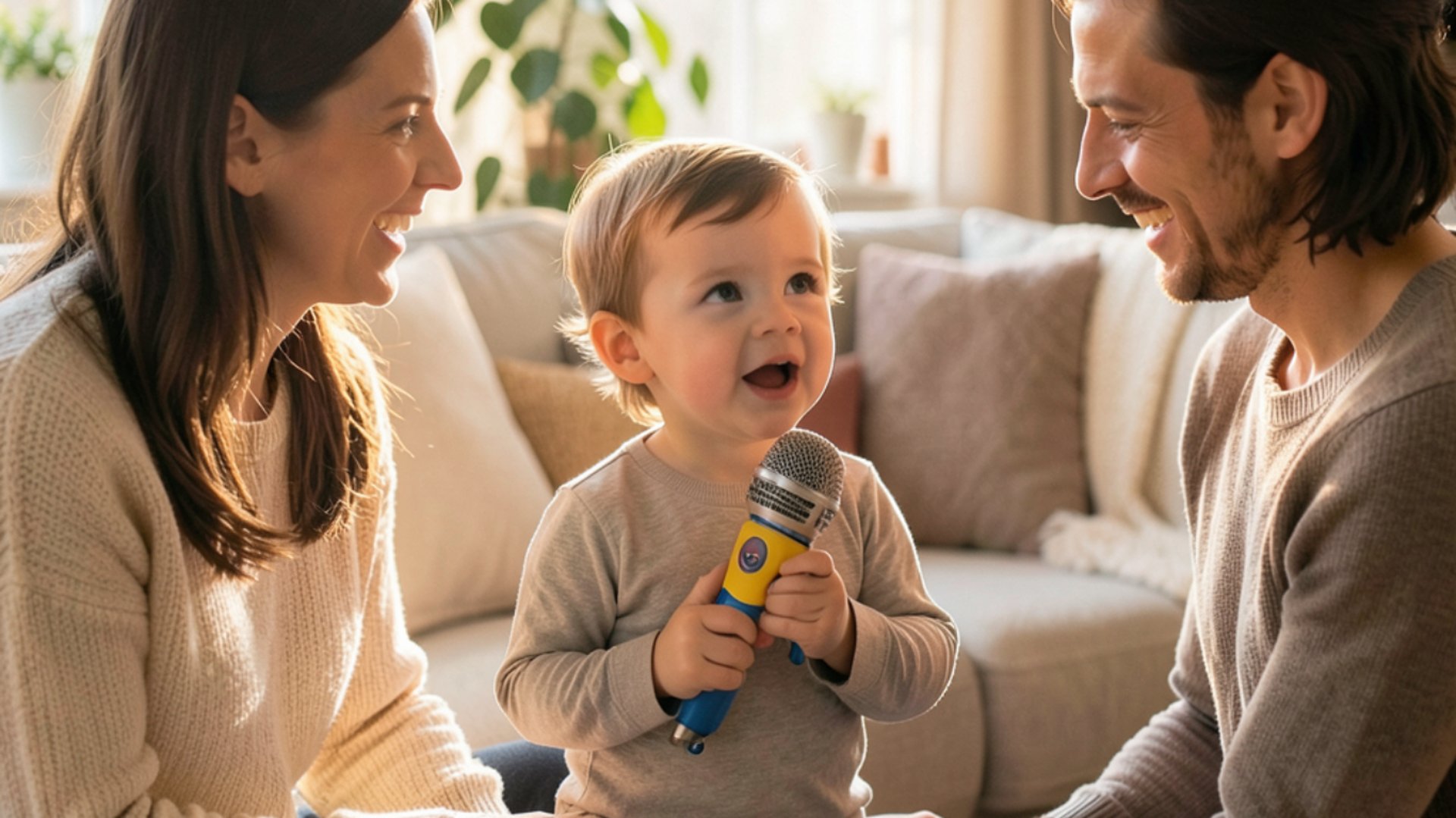
Step 7 - My Sounds Matter
Child making sounds but not words yet? Step 7 explains how responding to your child’s sounds teaches them that their voice matters and builds early communication.
STEP 7

When sounds become communication.
Some children use their voice often. Others make only a few sounds, or use their voice quietly. Many parents wonder whether these sounds matter if they are not real words yet.
They do.
Step 7 focuses on helping children learn that their sounds have meaning and impact. Before children use words, they learn to use their voice intentionally. A sound, a squeal, a hum, or a repeated noise can all be ways a child communicates.
When a child makes a sound and someone responds, the child learns something powerful. They learn that their voice can cause a reaction. This is the moment when sounds move from random noise to purposeful communication.
What research tells us?
Research shows that children who use intentional sounds and gestures early tend to develop stronger spoken language later on. These sounds help children practise timing, turn taking, and cause and effect.
When a child makes a sound and an adult responds, the brain begins to understand communication as a shared experience. Sound making becomes a way to connect, not just a noise.
This step is important because it helps children realise that communication works both ways. Once children know their voice matters, they are more motivated to use it again.



What activities can you do?
You can support this step by responding to your child’s sounds and modelling sounds back.
During play, copy simple sound effects such as “mmm”, “ahh”, “uh oh”, or “brrr”. Use animal sounds like “moo”, “baa”, or “woof” with toys. Make vehicle sounds like “vroom”, “beep”, or “choo choo” when playing with cars or trains.
Most importantly, imitate your child’s sounds. If your child makes a sound, copy it and pause. If they respond again, copy them once more. This back and forth teaches your child that sound making is communication.
There is no need to correct sounds or push words. Any intentional sound counts.


Watch the YouTube Series and Download the Free Guide
In this video, we explain Step 7 of the 10 Steps to Talking and show how responding to your child’s sounds helps turn sound making into communication. Watch below to see how simple, responsive interaction builds confidence and prepares children for words.