
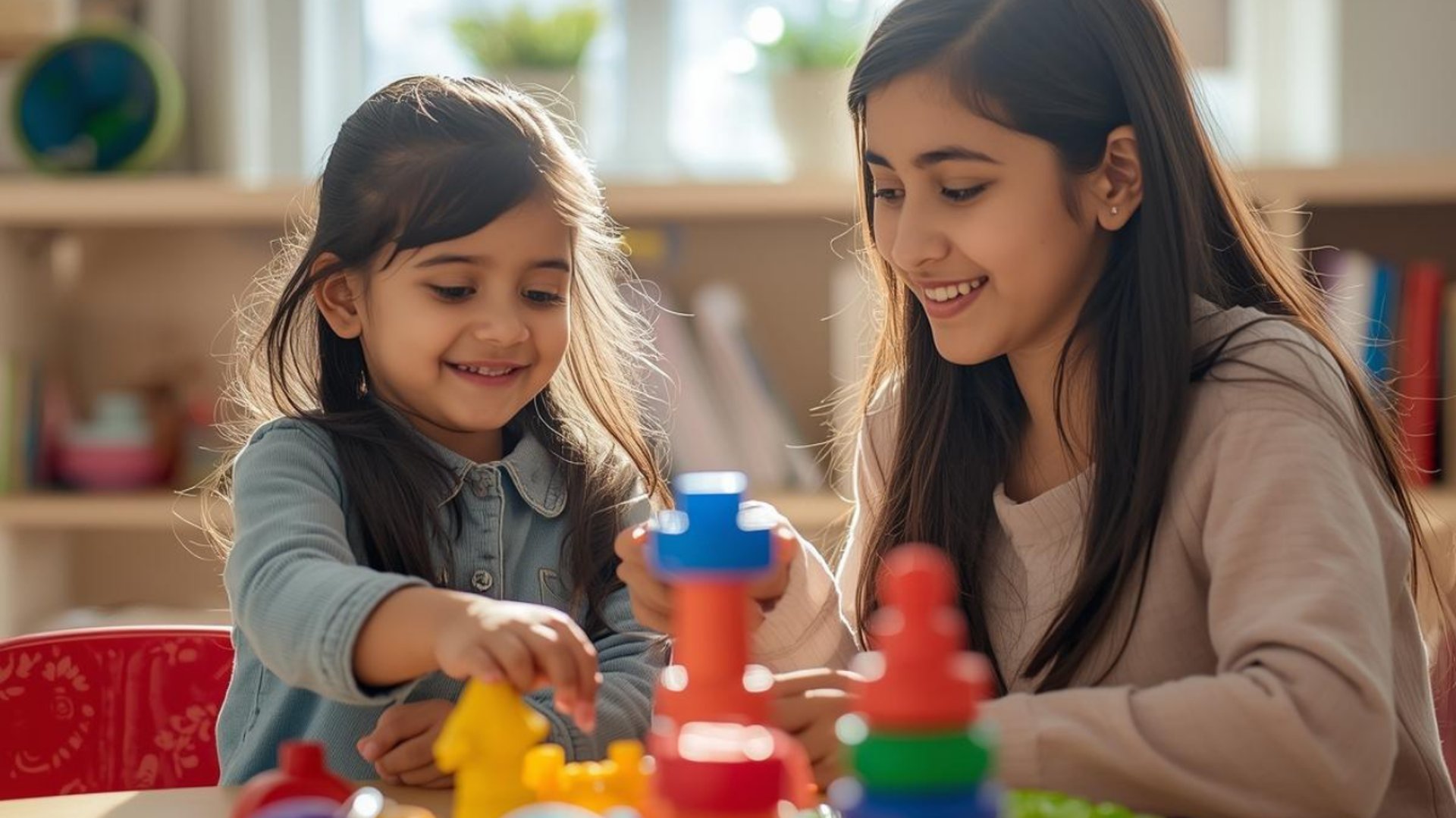
Step 9 — It’s My Turn
Discover why turn-taking matters. Step 9 explores how back-and-forth play supports conversation skills and language development.

Does your child struggle to wait or quickly move on during play?
Step 9 focuses on turn-taking. Before children can have conversations with words, they need to learn the rhythm of back and forth interaction. Conversation is not just about talking. It is about waiting, responding, and sharing a moment with someone else.
A turn can be a sound, an action, a look, or a movement. What matters is that it goes back and forth between two people. This shared rhythm is the foundation of communication.
When children learn that interaction has turns, they begin to understand how conversation works.
What research tells us?
Research shows that children who are better at turn-taking during play tend to develop stronger spoken language and longer sentences later on. Turn-taking supports timing, listening, and self-control. It also strengthens attention and social understanding.
When a child learns to wait for their turn and respond to someone else, they are practising the same skills needed for conversation.
Turn-taking is not about perfection. It grows gradually through playful, repeated interaction.



What activities can you do?
You can build turn-taking through simple games.
Roll a ball back and forth. After you roll it, pause and wait. Let your child take their turn. If needed, gently guide the pattern and keep it predictable.
Use wind-up toys. Take turns winding and watching. Pause before each turn and look at your child so they can anticipate what happens next.
Try container dumping games and share turns emptying or filling. In pretend play, use one spoon or one item and say “my turn” and “your turn” as you pass it back and forth.
Pause often. Waiting is just as important as acting. Any response counts.


Watch the YouTube Series and Download the Free Guide
In this video, we explain Step 9 of the 10 Steps to Talking and show how simple turn-taking games help children learn the rhythm of conversation. Watch below to see how everyday play builds the back and forth needed for speech.